There are so very many newspapers, magazines, and websites that are publishing lists of “celebrities” that have died this year….. Somehow, they always seem to miss a few people of note. People – and even things, on occasion – that have left their mark or have some claim to fame that makes them worthy of remembrance.
Here’s a final salute to some of those who might not appear in the usual places:
JOHN ADAMS (1952-2023):
“You’re not going to hit that, are you?” asked another fan. On Aug. 24, 1973, Adams schlepped a 26-inch bass drum with him into the bleachers at Cleveland’s Municipal Stadium. Of course he was going to hit it – it was a better noisemaker than banging on the seats. Another fan suggested he take it up to the back row, so he wouldn’t annoy any other fans.
Since then, he banged his drum at almost every home game (missing only 45 out of over 3700!!!!), including the post-season – up to the pandemic year of 2020. Along the way, he became both a fan and a team favorite, bringing his drum to many of the team’s special fan events.
After 2020, poor health kept him away from the ballpark. Adams was honored before Cleveland’s home opener on April 5, 2021 when Pat Carney, drummer for Akron’s Black Keys, sat in his bleacher seat and played his bass drum. When asked why he did it, Adams replied “What keeps anybody a fan? I’ve loved the game since I was a little kid. How do you explain how you fall in love with something? You just do. That’s what happened to me.”
“Playing in front of John was a unique baseball experience. That was all we knew as players and that’s a fact. John was going to be there no matter what. He was a genuine fan.” – Player and coach Sandy Alomar
“That drum beat it was powerful. It felt like, ‘We are the Cleveland Indians.’…With that beat going on, it lifted our spirits.” – Kenny Lofton

Adams in his reserved spot (note the sign behind him) during a 2016 playoff game.
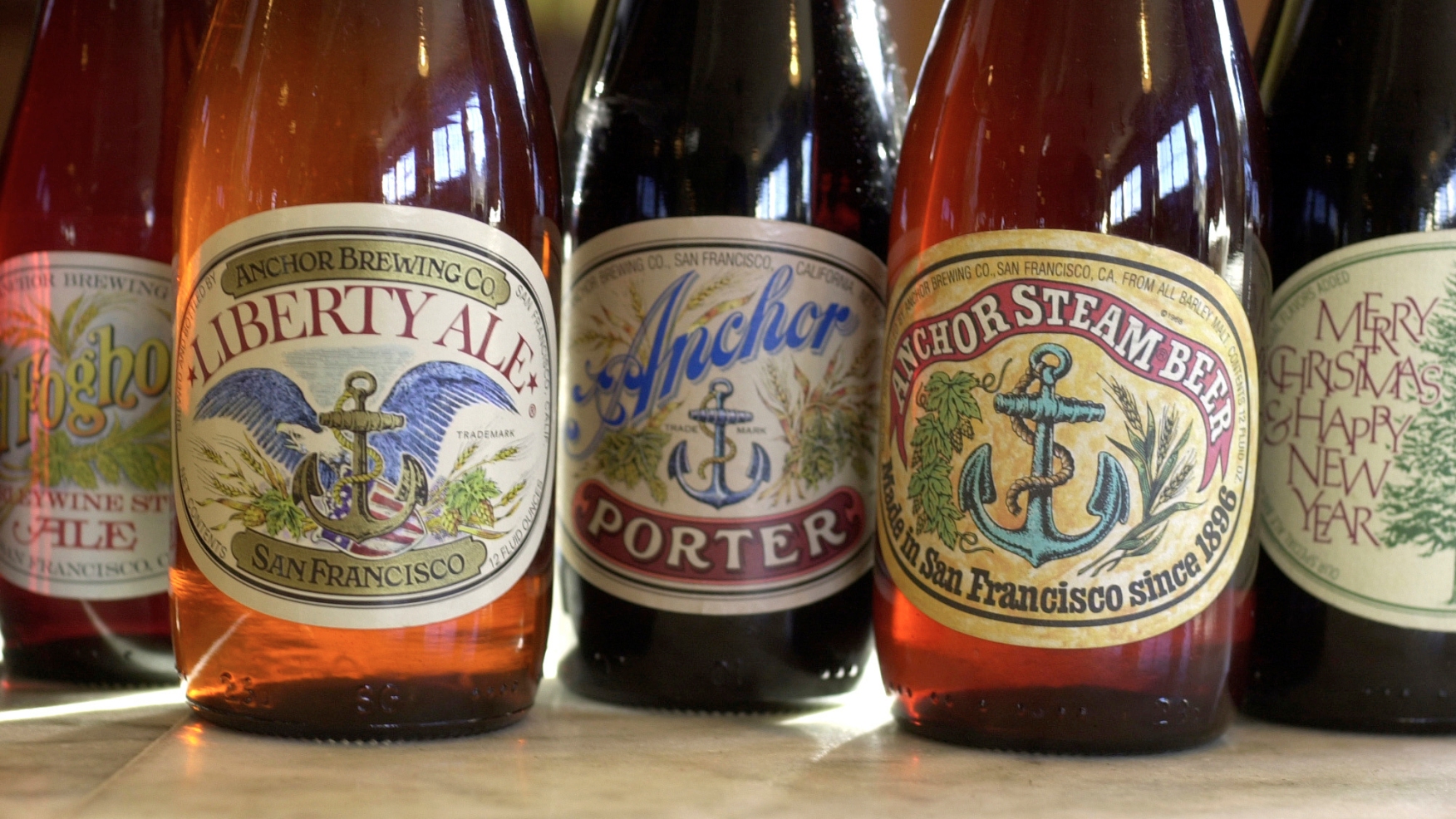
ANCHOR BREWING CO. (1896-2023):
Anchor wasn’t a craft brewery in the sense we understood the word—it was bigger than that. It stood as an example of endurance amid unbelievable change, of the possibility that little, quirky things can live in a world of hard-edged creative destruction. It was the ultimate metaphor for American brewing in all the ways that founding story hinted. Obviously, the brewing industry will carry on without Anchor, and it will do just fine. But it can’t continue as the same industry represented by Fritz Maytag’s wonderful, traditional, innovative, local, and independent little brewery if that brewery itself couldn’t survive.
Craft beer has been in transition for a long time. Anchor’s final legacy will be ushering it out of its founding era. Whatever craft beer is, it’s a different thing now that Anchor is gone.
FERNANDO BOTERO (1932-2023):
Born in Medellin, Colombia, an uncle enrolled him in a bullfighting school. When it came time to face an actual bull, though, he quit. It was while sketching scenes of the bullring that he found his true passion. A second place award in a 1952 national art competition allowed him to study in Europe. He settled in Mexico City, where he developed his signature style. His movement toward a more exuberant style grew upon his return to Bogotá, where artists and writers were beginning to blur the lines between the real and the fantastical. The movement would explode by the 1960s into a genre known as “magical realism”.
He moved to New York in 1960, but his work generated little attention – until a chance visit by a curator from the Museum of Modern Art had that museum purchase his “Mona Lisa at Age Twelve”. He’d branch out into sculpture, making several large pieces for public places.
“My popularity has to do with the divorce between modern art, where everything is obscure, and the viewer who often feels he needs a professor to tell them whether it’s good or not,” Mr. Botero told the Los Angeles Times. “I believe a painting has to talk directly to the viewer, with composition, color and design, without a professor to explain it.”

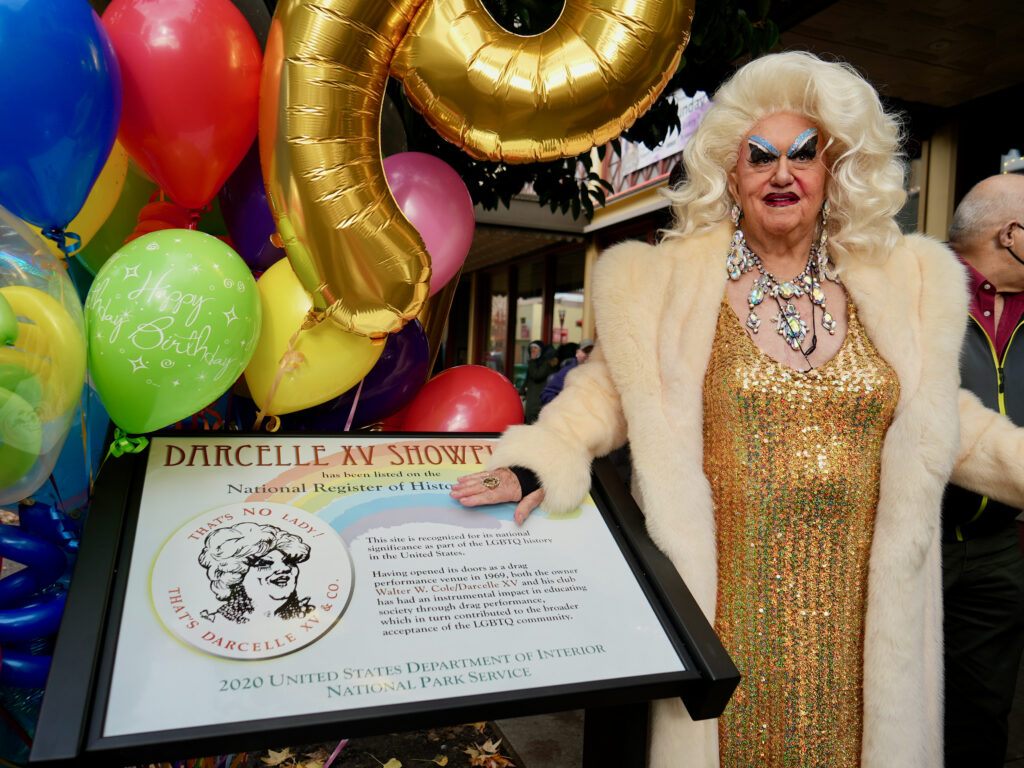
WALTER COLE aka DARCELLE XV (1930-2023):
Born in Portland, OR, he married his high school sweetheart, Jeannette Rosini, in 1951 and served in the Army at a base in Italy before returning to Portland. They had two children while he worked at a grocery store, and later opened a coffee shop.
While acting in local theater, he met drag performer, Leroy “Roxy” Neuhardt. The attraction was immediate. Cole kept their relationship secret from his family for years. He eventually came out in 1969 and moved in with Neuhardt, but Cole and his wife never divorced.
“There was nothing about marriage I didn’t like,” he said. “It was just that I was gay and I had to tell them.”
In 1967, Cole bought a run-down tavern in Portland’s Old Town, which was then a blighted part of the city. “I walked in here and opened up the door and wept. I thought, ‘What have I done?’ But that didn’t last long,”
The new club became a favorite for the city’s lesbian community. To boost business, he tried a revue-style show on a 4-by-8-foot banquet table in the back of the bar. At 37 years old, Cole did his first performance in drag. Yet he still needed a name.
“You can’t be Alice or Mary,” Cole recalled being told by Neuhardt. “You’re just too big and too over-jeweled and too much hair.” Neuhardt had met the French actress Denise Darcel in Las Vegas. The name was tweaked to Darcelle, and it stuck.
A Portland LGBTQ+ group, the Imperial Sovereign Rose Court, declared Darcelle its “15th empress” in 1973. The club was later re-christened Darcelle XV Showcase, which became a hub of the city’s gay activism.
During the AIDS crisis in the 1980s, Cole led fundraisers for medical research and to assist those with HIV, the virus that causes AIDS, which at the time was considered a potential death sentence before the development of drug therapies. The Darcelle XV AIDS Memorial, a granite sculpture for Oregonians who died of AIDS, was dedicated in 2017.
For more than 30 years, the club hosted free Christmas Eve banquets for anyone in need.
“He’s taken what used to be a ‘weird’ thing into the mainstream here in Portland — going to ribbon cuttings with the mayor, being in parades — when all of that was not yet part of the culture,” said Don Horn, the managing director of Portland’s Triangle Productions, which produced a 2019 musical, “Darcelle: That’s No Lady.”
In 2016 also came recognition by Guinness World Records as the world’s oldest professional drag performer.
A host of Portland and congressional officials backed an effort to have Cole’s club added to the National Register of Historic Places in 2020 for its significance in LGBTQ+ history. This year, Portland’s Gigantic Brewing unveiled a “Darcelle Blonde IPA”.
The label features Darcelle with a towering blond hairdo and ruby earrings. Cole, as Darcelle, was on hand for the beer tasting and was doing his act at the club up until the week before their death.
ASTRUD GILBERTO (1940-2023):
Astrud Weinert was the youngest of three sisters, born into a family both musical and at ease with foreign languages: Her mother was a singer and violinist, her father a linguistics professor. By her teens, she was among a circle of musical friends and had met João Gilberto, a rising star in Rio’s emerging bossa nova scene, where she would often perform as a singer.
She married Gilberto in 1959. A few years later, jazz saxophonist Stan Getz was working with Gilberto on a bossa nova album. Gilberto invited her to come to the recording studio, saying he had a surprise for her. “I begged him to tell me what it was, but he adamantly refused, and would just say: ‘Wait and see …’ Later on, while rehearsing with Stan, as they were in the midst of going over the song ‘The Girl from Ipanema,’ João casually asked me to join in, and sing a chorus in English, after he had just sung the first chorus in Portuguese. So, I did just that,” she explained. “When we were finished performing the song, Joao turned to Stan, and said something like: ‘Tomorrow Astrud sing on record… What do you think?’ Stan was very receptive, in fact very enthusiastic; he said it was a great idea. The rest, of course, as one would say, ‘is history.’”
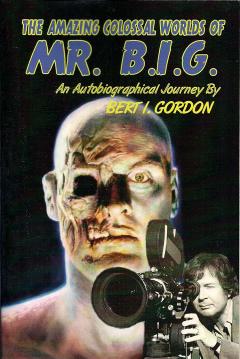
BERT I. GORDON (1922-2023):
The Amazing Colossal Man (1957)
The Beginning of the End (1957)
Attack of the Puppet People (1958)
The Spider (1958)
The Magic Sword (1962)
Village of the Giants (1965)
The Food of the Gods (1976)
Empire of the Ants (1977)
“If they’re supposed to scream in fright, and the spider [is sneaking up on its victim] and you’re waiting, waiting, and the sweat is building up, and all of a sudden, it happens, and they scream — that’s what it’s all about. I love it.”
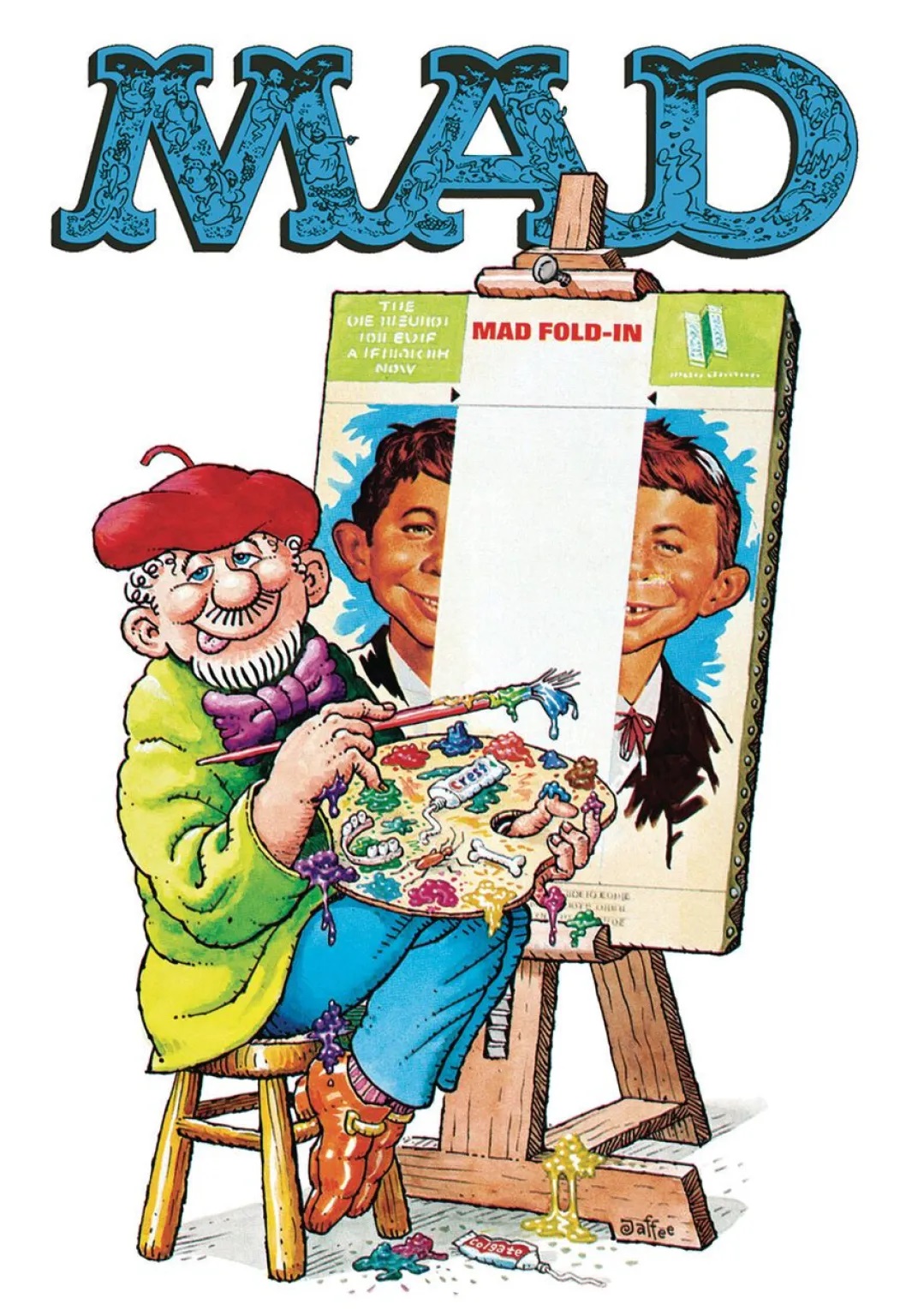
AL JAFFEE (1921-2023):
MAD contributor, 1955-2020
Of all the people who’ve ever written for MAD Magazine, Al Jaffee was the best artist.
And of all the people who have ever drawn for MAD, Al Jaffee was the best writer.
That basically says it all.
Who among you has enjoyed a good run at your job? The kind of hot streak that really put you in solid at the office, and gave you career security? Good for you… but Al Jaffee has you beat.
In MAD #86, Al debuted his first Fold-In.
In issue #91, Al debuted his first full-fledged “inventions” article, “Some MAD Devices for Safer Smoking.”
In issue #98, Al debuted his first “Snappy Answers to Stupid Questions.”
Those are three very different comedic structures. Thought up by one man within a year and a half. And each of those ideas pulls you in, and makes you more than a reader. They make you a participant.
The concepts were so strong and so fertile that he was able to revisit those three formats again and again for the next 55 years. I’d say that was a pretty decent year and a half for Al Jaffee.
– Desmond Devlin and Tom Richmond
THE NATIONAL RESEARCH COUNCIL TIME SIGNAL (1939-2023):
Since November 5, 1939, the Canadian Broadcasting Company’s Radio One broadcast the NRC time signal once a day, advising listeners “the beginning of the long dash” would mark the beginning the hour: one o’clock in Ontario, 10 in the morning in British Columbia.
In a statement, spokesperson Emma Iannetta described the signal as a “wonderful partnership,” but confirmed it’s being dropped.
Given the range of CBC platforms from traditional over-the-air radio, to satellite and the internet, the long dash undergoes a range of delays by the time it’s heard, leading to accuracy concerns from the NRC, she wrote. “We share the nostalgia that many people have towards the daily time announcement but Canadians also depend on us for accurate information,” she wrote. “With all of the different distribution methods we use today we can no longer ensure that the time announcement can be accurate.”
In a 2019 interview with Day 6 on the occasion of the signal’s 80th birthday, Laurence Wall, one of its current voices, reflected on its origin and importance. His memories include taxi drivers recognizing his voice from daily announcements and hearing from a young man living in Hong Kong who would stay up past midnight just to hear the time signal because it reminded him of home.
MICHAEL PARKINSON (1935-2023):
Working up the ladder in journalism, he landed a spot on the BBC’s “24 Hours” current affairs program as a reporter. In 1971, he was offered the chance to host his own talk show. His first guest was noted comic actor Terry Thomas. Nothing to write home about. Then he heard Orson Welles was filming in Spain. A quick call, and Welles agreed to show up – for a hefty fee. “If we can get Orson Welles,” he recalled thinking, “the rest will follow — bill it and they will come. And we were right.”
Welles, who tossed the host’s notes into a trash can, reminisced about bullfighting (“it is indefensible and irresistible”) and his physical altercation with author Ernest Hemingway before they become friends. Overnight, “Parkinson” was a sensation — a draw for international newsmakers from Madonna to Nelson Mandela to Woody Allen. Celebrities who came to plug a new film or enterprise found themselves instead revealing glimpses of their private lives.
“He was a terrific TV interviewer, but it was only years after his program came off air that his critics realized how good he had been,” said Roy Greenslade, one of Britain’s leading media commentators.
Parkinson was knighted by Queen Elizabeth II in 2008 for his services to broadcasting. In an interview a few years earlier with the Melbourne Age, he articulated his belief in his inquisitive style of hosting.
“If you try and impose yourself as the interviewer, you’re not doing the right job,” he said. “The new generation has grown up with the [David] Lettermans and the [Jay] Lenos. But they’re not interviewers. They’re stand-up comics. If their life depended on doing one decent interview, they’d be shot at dawn. I believe softly-softly is the best approach. Once you get going, there’s nothing you can’t ask a person.”

David Bowie, “Parkie”, and Tom Hanks in 2002.
POPULAR SCIENCE (1872-2023):
“The work of creating science has been organized for centuries,” wrote founder Edward Livingston Youmans in his inaugural editor’s note in May 1872. “The work of diffusing science is, however, as yet, but very imperfectly organized, although it is clearly the next great task of civilization.” Youmans implored his authors, most of whom were among the era’s most prominent practicing scientists and philosophers, to translate their work into language those outside their fields could more readily understand.
This storytelling style “made the publication trustworthy and accessible,” Purbita Saha, a former senior deputy editor, told Defector. “It also helped people who don’t regularly read academic journals, follow wonky policy changes, or watch overhyped tech press conferences feel empowered.” The magazine also had a dedicated DIY section that helped readers learn new skills and experiment.
In 1883, they published the revolutionary idea that microscopic germs, not bodily impurities, caused disease. In 1931, a Popular Science reporter was there when Auguste Piccard became the first person to reach the stratosphere. And, in 1984, they were among the first to get up close with Steve Jobs and his new Macintosh computer. Along the way, they’ve been wondering, for example, if medical science will find a cure for aging since at least 1923, talking about “flying cars” since 1926, and asking when artificial smarts will replace baseball umpires since 1939.
The website will still live on, but it won’t be the same without the longer articles and reporting that appeared in the regular issues of the magazine.
“Where are the scientists going to get public investment in their research?” Chelsey B. Coombs, a former social media editor, asked, adding that earlier-career researchers especially benefit from getting their work covered in a publication like Popular Science. “Shutting that down means we lose insightful storytelling that delved deep into climate solutions, medical discoveries, deep space exploration, animal wisdom, and just plain cool experiments and inventions,” Saha said. “Involved, reported features best capture the enormous, entangled scale of the crises occurring on the planet and the innovations pushing science forward — the kinds of stories science journalism used to prize.”
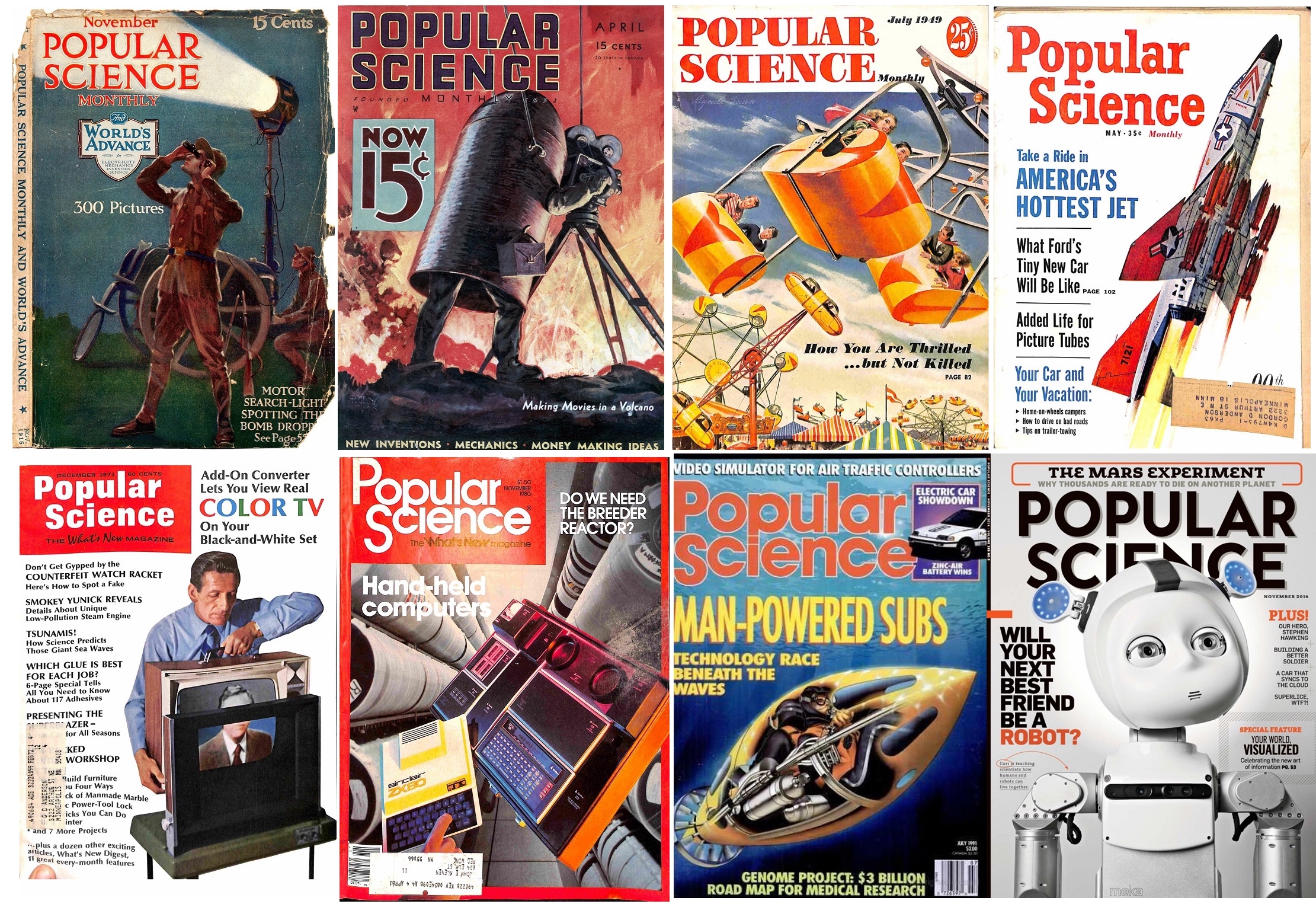
Through the years: 1915, 1933, 1949, 1962, 1971, 1980, 1991, 2014.
BROOKS ROBINSON (1937-2023):
“Brooks Robinson belongs in a higher league.” – Pete Rose
“He was the best defensive player at any position. I used to stand in the outfield like a fan and watch him make play after play. I used to think WOW, I can’t believe this.” – Frank Robinson
“He can throw his glove out there and it will start ten double plays by itself.” – Sparky Anderson
“He charged everything. He reacted as the ball was coming off the bat, sometimes as it was coming to the bat!” – George Brett
“There’s not a man who knows him who wouldn’t swear for his integrity and honesty and give testimony to his consideration of others. He’s an extraordinary human being, which is important, and the world’s greatest third baseman of all time, which is incidental.” – John Steadman, Baltimore News American
JOHN ROMITA SR (1930-2023):
Born in Brooklyn, a chance encounter got him an entry into Timely Comics, where he’d meet Stan Lee. A stint in the Army, where he designed recruiting posters, got him more experience and confidence. He’d go back to what was to become Marvel Comics, and wound up working there full time in the 1960s. He’d get picked to follow Steve Ditko on the Spider-Man comics, where he’d bring Lee’s character ideas to full-color life.
His run on Spider-Man saw the introduction of a number of the property’s most memorable characters, including Spidey love interest Mary Jane Watson and crime boss Kingpin; it was during Romita’s time as artist that Spider-Man overtook Fantastic Four to become Marvel’s top-seller, with the masked man becoming the face of the company.
In 1972, Romita became Marvel’s unofficial art director, a role that was formalized a year later. He contributed to the design of characters including Luke Cage, the Punisher and Wolverine while training “Romita’s Raiders,” the in-house artists that would correct or replace pages deemed to be unusable, often without credit. In his later career at Marvel, he’d be the one tasked with creating special issues, like the story of Peter Parker and Gwen Stacy’s first kiss (Tales of Spider-Man (1999) #1) and a reunion with his Uncle Ben (Amazing Spider-Man (1999) #500).

A self-portrait, surrounded by his creations.
MARK RUSSELL (1932-2023):
Over the years, the political humorist developed a reputation among Washington insiders for a savvy knowledge of how the city’s political class works and plays. He often attended congressional hearings to deepen his knowledge of the legislative process and the personalities involved.
“Even in Seattle, where political correctness feeds at the twin troughs of good manners and social rectitude, satirist Mark Russell has a following,” John Levesque, TV critic of the Seattle Post-Intelligencer newspaper, wrote in 1997. “Russell is a master at condensing information, a sort of walking, talking Reader’s Digest, with a twist of irony.”
Frequently asked if he had a team of writers, he replied: “Oh yes, I have 535 writers. One hundred in the Senate and 435 in the House of Representatives.”
In a statement, Rep. Debbie Dingell (D-Mich.) called Russell a “once-in-a-generation mind” who “had the ability to make us laugh when we needed it the most.”
Describing him as a “special man and friend,” Dingell said, “He had his finger on the pulse of the country and helped keep life in perspective with his wit.”
JERRY SAMUELS (1938-2023):
Born in the Bronx, Samuels learned to play the piano at an early age and began performing in local bars. By his 20s, he landed a position as a recording engineer and songwriter, co-writing under a pseudonym “As If I Didn’t Know”, which became a hit for Adam Wade in 1961, and writing “The Shelter of Your Arms”, a big 1964 hit for Sammy Davis Jr.
In 1966, he began tinkering with new editing technology that would let him raise the pitch on a song recording without changing the tempo. He wrote and recorded a song using that technique, and persuaded Warner Brothers to release it…..
It actually peaked at #3 on the charts. He’d never be able to match it.
“Still, he created a masterpiece and nobody can take that away from him.” – Dr. Demento
JUSTIN SCHMIDT (1947-2023):
After graduating from Penn State, he moved on to study honey bee nutrition, chemical communication, physiology, ecology and behavior at the Carl Hayden Bee Research Center in Tucson, Arizona. In 2006, he joined the Southwest Biological Institute, where he studied the chemical and behavioral defenses of ants, wasps, and arachnids.
In 1973, he was digging up a colony of harvester ants with a colleague (who would soon become his wife). They were both stung, and she described the episode as a “deep ripping and tearing pain, as if someone were reaching below the skin and ripping muscles and tendons; except the ripping continued with each crescendo of pain.”
“I realized [the harvester ant stings] were dramatically different from honey bees, wasps, and hornets. They are like day and night different,” said Schmidt.
He began to study the medical implications and biochemistry of the venom—the toxic compounds causing stings to often be much more painful than insect bites. Schmidt found that there was a difference in chemistry when the pain and skin reaction varied after a sting and set out to obtain a larger survey.
Collecting data on stings became Schmidt’s side project. While most people would flee, Schmidt went out of his way to get to stinging insects. He decided to create a scale that would attempt to categorize the pain of a sting. He determined the stinging score by two components: the actual physiological harm and what he called the “ouch factor.” While a universal definition of pain does not exist, Schmidt believed that everyone recognizes that pain comes in a variety of flavors. “Pain truth comes in two flavors, imagined and realized. With stings, our imagination is vivid and strong, even if the sting pain is not realized.”
What made the Schmidt Pain Index unique was always his elaborate retellings of the stings. For example, the Florida Harvester Ant has a sting described as “Bold and unrelenting. Somebody is using a power drill to excavate your ingrown toenail.”
“Numbers are kind of an unnatural thing,” he said. “I can’t even remember the numbers. I have to look at my notebook and see how I evaluated it, whereas the descriptions are much more graphic. I think they’re just a much better way of communicating and conveying the essence of what the numbers are really trying to tell you.”
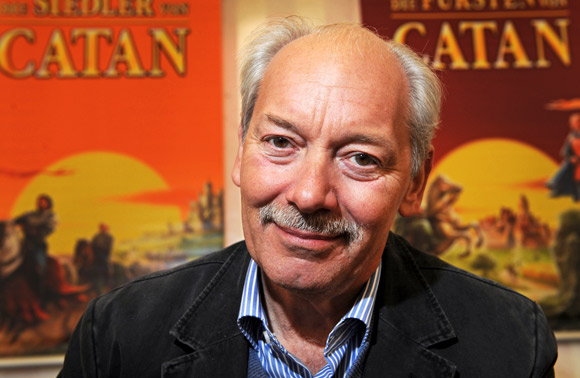
KLAUS TEUBER (1952-2023):
Born in Rai-Breitenbach, Germany, he didn’t show much interest in board games until he was given a game about Romans versus Carthaginians at age 11. He began to experiment with different ideas of his own.
After receiving a degree in chemistry, he joined his father’s lab in Darmstadt, crafting bridges and other dental work. “I was not happy,” he said. In the evenings, he would dabble with his board game ideas in the basement in the family home in Rossdorf.
His family became the focus group. They played prototypes of his games and suggested tweaks or wholesale changes. As a boy, his son Benjamin kept a Mickey Mouse comic book close by. It was a signal to his father. “In case the game was boring, he knew that I’d read it instead of playing the game,” Benjamin said.
A few of these games actually made it to market, becoming hits and winning Germany’s “Game of the Year” award.
His biggest hit was inspired by his boyhood fascination with the Vikings. “I imaged how [the Vikings] reached Iceland,” Mr. Teuber told an interviewer. “They need wood. They need houses and other things.”
Settlers of Catan was released in 1995…..
 Pure Blather
Thanks for recognizing Bert Gordon. I loved the Colossal Man movies when I was a kid. If it were raining on a Saturday afternoon (and sometimes when it wasn’t), I was watching Creature Double Feature on Channel 56 in Boston.
LikeLike
Al Jaffee, John Romita and Justin Schmidt all meant something to me, and I wouldn’t have had the chance to reflect on that had you not shared this. Thanks.
LikeLike